The Future of Computer Hardware
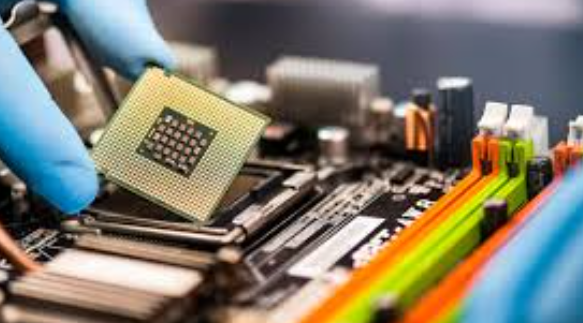
The future of computer hardware merges commodity performance with specialized accelerators. Nanoscale, neuromorphic, and 3D-stacked architectures promise lower latency and power while expanding parallelism. Energy and thermal limits will impose disciplined design and autonomous cooling, supported by adaptive sensing. Modularity and open ecosystems aim to reduce vendor lock-in, with AI-guided design accelerating prototyping. A holistic, interoperable platform may balance performance, governance, and sustainability, yet practical constraints will define the path forward.
What’s Driving the Next Hardware Wave
The next wave of computer hardware is propelled by the convergence of commodity performance, energy efficiency, and specialized accelerators, driven by escalating data workloads, real-time inference demands, and the end of Dennard scaling.
The analysis identifies chips beyond silicon and quantum interconnects as central enablers, enabling heterogeneous fabrics, scalable latency, and improved bandwidth, while preserving freedom through modular, interoperable ecosystems.
From Chips to Chips + Systems: Nanoscale, Neuromorphic, and 3D Stacks
From the prior discussion of scaling limits and heterogeneous fabrics, attention shifts to how nanoscale integration, neuromorphic concepts, and vertical stacking redefine system-level design.
Nano systems enable compact interconnects and parallelism; neuromorphic chips emulate cognitive processes with event-driven operation; 3d stacks consolidate memory, logic, and I/O, reducing latency and power. This integrated approach reshapes architectures and system performance expectations.
Energy, Efficiency, and Autonomous Cooling for Modern Devices
Energy efficiency and autonomous cooling have become pivotal constraints in modern devices, where energy is both a primary design guardrail and a practical limiting factor for performance. The discussion analyzes thermal ceilings, power envelopes, and leakage, emphasizing disciplined architectural choices, materials, and sensing. It presents metrics, tradeoffs, and control loops that enable predictable operation while preserving energy efficiency and autonomous cooling capabilities.
Practical Paths to Adoption: Modularity, Ecosystems, and AI-Guided Design
What practical paths exist to accelerate adoption of modular architectures, holistic ecosystems, and AI-guided design in contemporary hardware ecosystems?
Strategic modularity pathways emphasize standard interfaces, open specifications, and vendor-agnostic platforms to reduce lock-in.
Ecosystem adoption hinges on interoperable tooling, shared libraries, and governance.
AI-guided design accelerates optimization and prototyping.
Together, they enable scalable, adaptable hardware, balancing performance with freedom and long-term sustainability.
See also: flixpress
Frequently Asked Questions
How Will Quantum Components Integrate With Conventional Processors?
Quantum components will integrate via fault tolerant integration, with quantum qubits interfacing to conventional processors through standardized interconnects. Neuromorphic chips may co-process certain tasks, enhancing energy efficiency while maintaining modularity; system architects pursue interoperability and scalable, freedom-oriented architectures.
What About Hardware Security in Next-Gen Systems?
Could hardware security keep pace with evolving threats? The analysis notes new attack vectors and supply chain resilience as central concerns, mapping risk surfaces, verification protocols, and hardened architectures to ensure trustworthy next-gen systems for an autonomy-seeking audience.
When Will Consumer Devices Adopt Neuromorphic Chips Broadly?
Adoption of neuromorphic chips in consumer devices remains speculative; widespread deployment will likely occur after 2030 as future memory architectures mature and edging manufacturing scales. Analysts emphasize performance, power efficiency, and ecosystem readiness guiding gradual rollout.
Can Hardware Replace Traditional Software Optimization Entirely?
A metaphorical dawn reveals hardware cannot wholly replace software optimization. Future memory and mixed precision training may diminish it, but thermal challenges and compiler integration ensure optimization remains essential, guiding autonomous systems toward enduring adaptability and disciplined engineering.
What Is the Cost Trajectory for Advanced Packaging?
The cost trajectory for advanced packaging shows initial high expenditures followed by gradual declines as process maturity and volume scale, with efficiency gains from heterogeneous integration offsetting material and throughput challenges in specialized supply chains.
Conclusion
The trajectory outlined merges commodity performance with targeted accelerators, shaping a modular, interoperable hardware ecosystem that scales with data and inference demands. While some argue that specialization hampers generality, disciplined integration of nanoscale, neuromorphic, and 3D-stacked architectures preserves flexibility through open standards and AI-guided design. Autonomous cooling and adaptive governance will sustain reliability and efficiency, enabling resilient systems that balance performance with sustainability and governance across diverse workloads and evolving AI workloads.