Proof of Work vs Proof of Stake: Key Differences
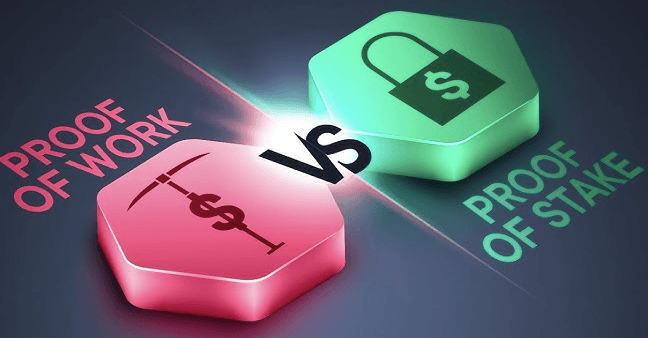
Proof of Work and Proof of Stake represent two distinct consensus models with different security guarantees and risk profiles. PoW relies on computational effort and energy expenditure to secure blocks, while PoS depends on stake, validator economics, and randomness. The efficiency, centralization pressures, and governance needs diverge accordingly. Trade-offs emerge in energy use, incentives, and long-term resilience. The contrast invites scrutiny of how each system aligns with real-world incentives, risk tolerance, and regulatory environments—an investigation that invites closer examination of practical outcomes.
What PoW and PoS Are, in Plain Terms
Proof of Work (PoW) and Proof of Stake (PoS) are two consensus mechanisms that security and validity of blockchain transactions rely on, differing primarily in how participants earn the right to author new blocks.
PoW relies on computational effort, while PoS uses stake and selection randomness.
Evidence shows varying Energy Impacts, efficiency, and risk profiles across networks.
Proof of; Stake Consensus discussed.
How Security Differs Between PoW and PoS
Security in PoW and PoS hinges on distinct failure modalities and threat models that influence resilience and attack costs.
The analysis compares attacker incentives, hardware dependence, and protocol assumptions with empirical uncertainty.
PoW concentrates risk around mining hardware and 51% dynamics, while PoS risks hinge slippage, validator coalition shifts, and long-range attacks.
Both demand rigorous simulation, transparent governance, and continuous auditing for freedom-respecting ecosystems.
Energy Use, Economics, and Incentives Explained
Energy use, economics, and incentives in PoW and PoS reflect contrasting macroeconomic and engineering trade-offs. The analysis focuses on energy consumption patterns, incentive alignment, security models, and potential centralization concerns. PoW’s energy intensity contrasts with PoS’s lighter footprint, while incentive alignment relies on stake rather than power. Cautious evaluation highlights trade-offs, data-driven implications, and disciplined policy considerations for robust, resilient networks.
Centralization Risks and Real-World Trade-Offs
Centralization risks in both Proof of Work and Proof of Stake ecosystems hinge on how economic incentives, governance, and access to resources shape participant distribution and network control.
The analysis identifies centralization concerns as a function of validator/miner concentration, token distribution, and external dependencies, while governance trade offs emerge from protocol upgrades, rate limits, and stakeholder turnout influencing long‑term resilience and innovation.
See also: The Future of Crypto Regulations
Frequently Asked Questions
How Do Forks Differ Between Pow and Pos Systems?
Forks in PoW arise from chain competition and block rewards, while PoS forks depend on validator decisions and stake slashing. The former emphasizes hardware-driven recalculation; the latter, stake-weighted consensus. The discussion avoids forbidden topics, unrelated concepts, and emphasizes cautious analysis.
Can Pos Recover From Long-Range Attacks or 51% Events?
A hypothetical exchange demonstrates: under proof of stake, long range attacks or 51% events are mitigated by finality and checkpointing, enabling rollback protections; nevertheless, recovery depends on governance updates, economic incentives, and rapid protocol responses to preserve freedom.
What Are Slashing Conditions and Their Real-World Impact?
Slashing conditions impose stake penalties and slashing incentives to deter misbehavior; their real-world impact centers on credibility, risk management, and network Security metrics, with precise outcomes varying by protocol design and governance, while observers weigh freedom and accountability tradeoffs.
How Do Governance and Protocol Upgrades Work Under Pos?
Governance resembles a balancing scale, signaling governance tradeoffs and upgrade mechanisms as weights. It analyzes stakeholder votes, protocol upgrades, and social consensus data cautiously, asserting that upgrade paths depend on incentives, security assumptions, and transparent, data-driven decision processes.
Do Pos Networks Require Trusted Setup or Centralization Risks?
PoS networks generally avoid trusted setups, but centralization risks persist through stake concentration, validator economics, and governance capture; staking incentives, if misaligned, can reinforce oligopolies, though active participation and open validator sets mitigatethese effects and promote freedom-focused resilience.
Conclusion
PoW and PoS converge only by accident of choice, not ethos. Coincidence paints security as a shared tension between cost and distribution: energy and hardware in PoW align with tangible, visible risk; stake and validator economics in PoS align with invisible, fluid incentives. Data suggest trade-offs: PoW’s hardware centralization vs. PoS’s stake concentration; energy intensity versus governance transparency. The picture remains cautious: neither approach is intrinsically superior—each exhibits distinct resilience and centralization pressures contingent on design, policy, and market dynamics.